
Abuse can take many forms, and it’s not always easy to recognize when it’s happening. Remember, no one deserves to experience abuse in any form, and every type of abuse is serious.
Understanding Gender Based Violence
A Common Question:
What Is Domestic Violence?
Abuse can take many forms, and it’s not always easy to recognize when it’s happening.
Remember, no one deserves to experience abuse in any form, and every type of abuse is serious.
If any of these situations are happening in your relationship regularly, your safety and well-being are at risk. Remember, it is not your fault that your partner is abusing you. However, only you can take the steps to protect yourself and your children. Saheli is here to help.
Do you...?
Sometimes feel scared of how your partner will act?
Constantly make excuses to other people for your partner’s behavior?
Believe that you can help your partner change if only you changed something about yourself?
Try not to do anything that would cause conflict or make your partner angry?
Always do what your partner wants you to do instead of what you want?
Stay with your partner because you are afraid of what your partner would do if you broke-up?
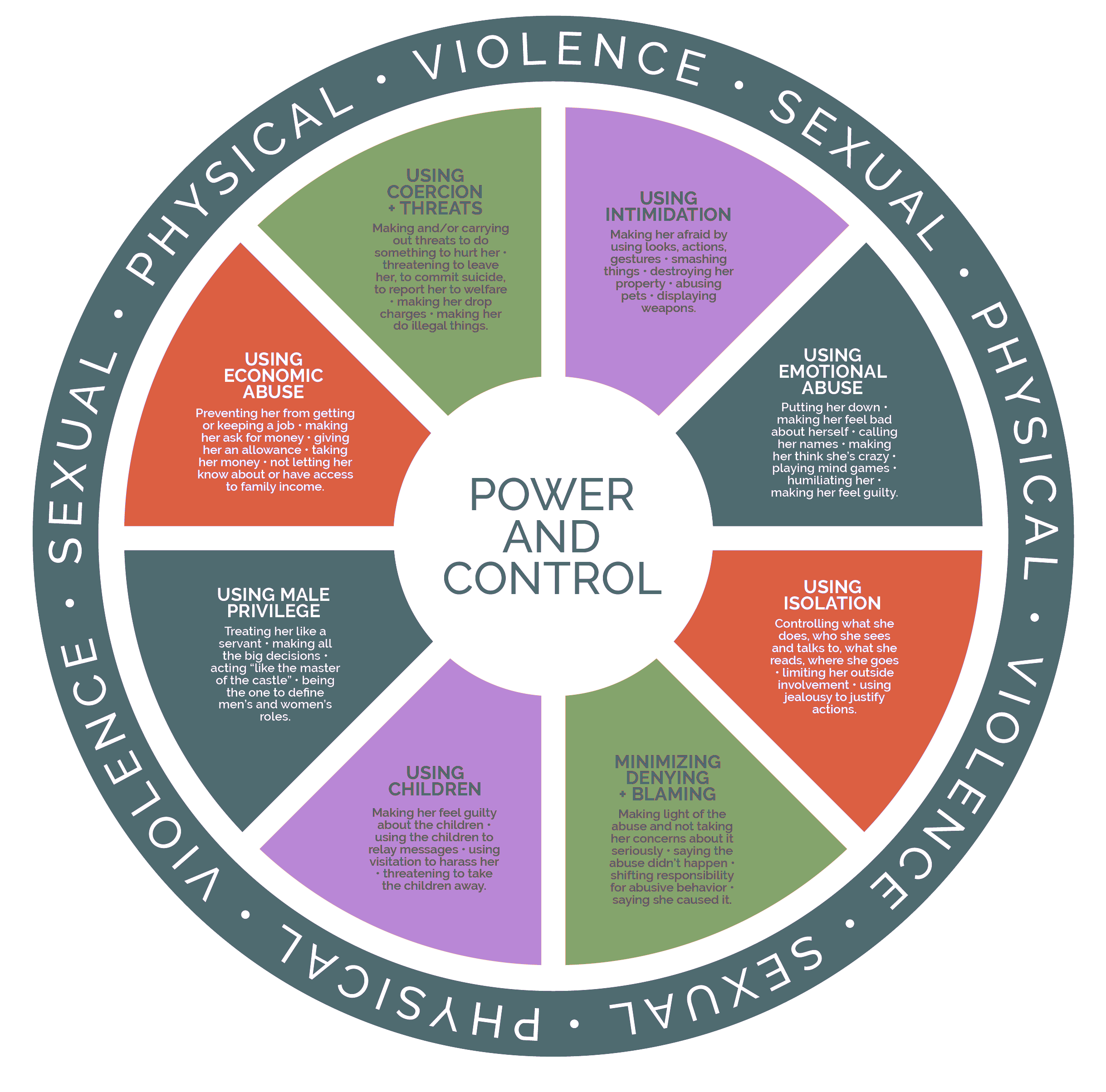

The Wheel of Power & Control
The Wheel of Power and Control is a tool used to understand the various tactics abusers use to maintain control over their victims in intimate relationships. Developed by the Domestic Abuse Intervention Project, this model shows how abusive behavior is not just about isolated incidents of physical violence but about ongoing, controlling behaviors that permeate many aspects of a victim's life.
The Power and Control Wheel illustrates that abuse is not only physical but can involve a range of manipulative behaviors designed to maintain dominance over the victim. Understanding these tactics helps survivors recognize the many forms abuse can take, empowering them to seek help.
Am I Being Abused?
If you are unsure whether what you are experiencing is abuse, ask yourself the following questions:
Is my partner controlling or isolating me?
- Do they try to control where I go, who I see, or what I do?
- Are they limiting my access to friends, family, or support systems?
Am I afraid of my partner?
- Do I feel scared to express my opinions or emotions around them?
- Do I often try to avoid doing things that might upset them?
Does my partner belittle or humiliate me?
- Do they make me feel worthless or insult me, either in private or in front of others?
- Are they constantly criticizing or putting me down?
Am I being physically hurt or threatened?
- Has my partner ever hit, pushed, or harmed me in any way? Threaten to deport, or file for divorce?
- Do they threaten to hurt me, my children, or themselves?
Am I experiencing financial abuse?
- Does my partner control my access to money or prevent me from working?
- Do they restrict my ability to make financial decisions?
Do I feel trapped in the relationship?
- Do I feel like I can’t leave, or that leaving would make things worse?
- Does my partner make me feel guilty or ashamed for wanting to leave?
Am I being mentally or emotionally manipulated?
- Does my partner make me doubt my own judgment or question my sanity?
- Are they manipulating my emotions to control my actions?
Am I being sexually manipulated?
- Does my partner pressure me sexually for things I am ready for?
- Does he force me to have sex with him even if I say NO?
If you answered “yes” to any of these questions, you may be experiencing abuse. You deserve to feel safe and respected in your relationship.
Saheli is here to support you. Call Saheli’s confidential Helpline: 866-472-4354 for assistance. You are not alone.
Am I Being Abused? Take this Quiz:
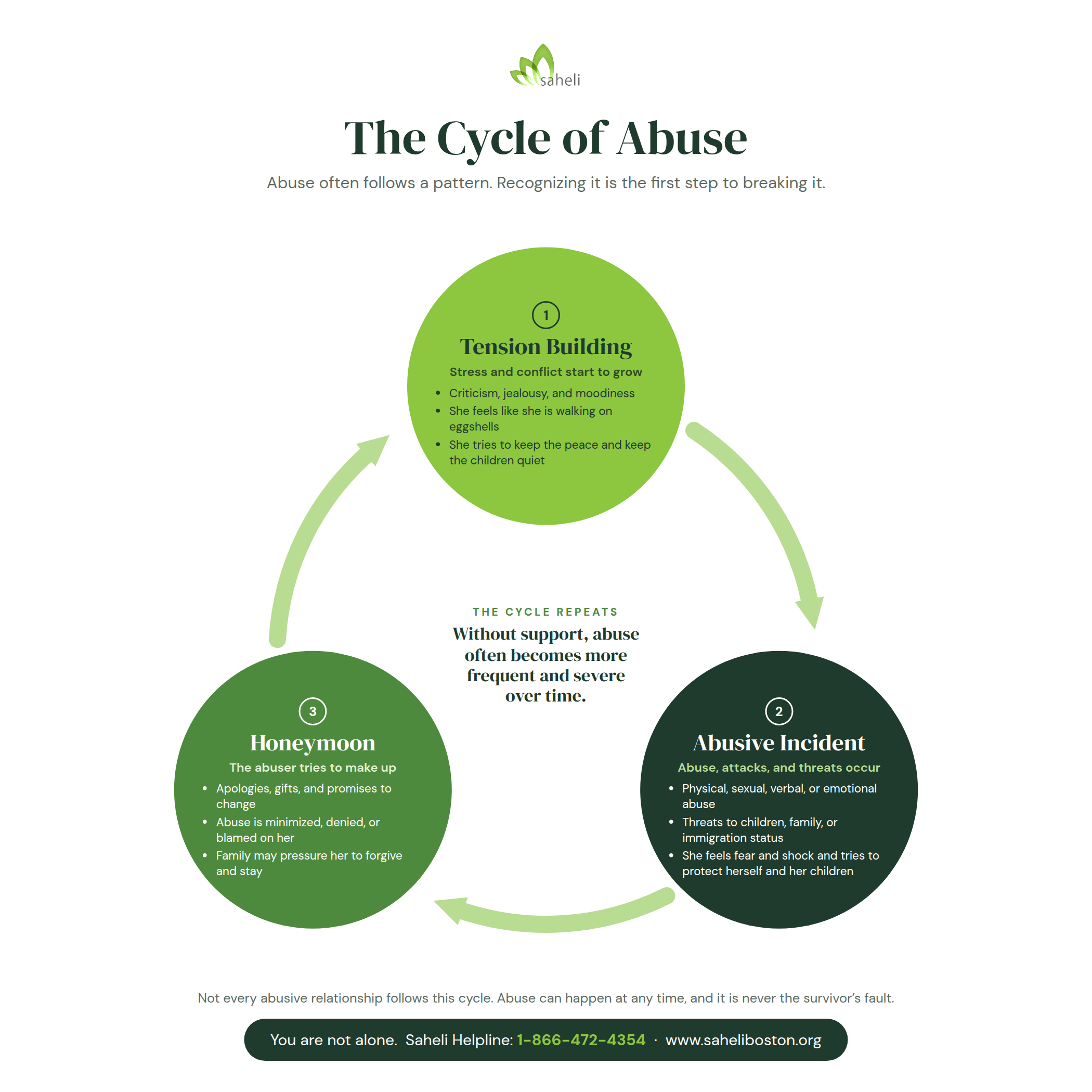
Trauma in Domestic Violence and Its Effects
Trauma in Domestic Violence and Its Effects If you are a South Asian or Arabic-speaking immigrant experiencing domestic violence or another emergency, it’s essential to know your rights when interacting with law enforcement. At Saheli, we understand the unique...
Helpful Links & Resources
Local Resources:
National Resources:
-
Quincy Community Action Programs
-
Phone: 617.479.8181
Make sure to ask to sign up for housing search workshop
-
-
HomeStart Housing Search Program
-
-
Phone: 617.542.0338
Walk-in hours Wednesdays 3-4:45pm
-
-
Make sure to apply for preferences due to domestic violence
Make sure to apply for preferences due to domestic violence
Rental Assistance Resources:
Rental Assistance for Families in Transition (RAFT):
-
NeighborWorks Housing Solutions
-
Phone: 781.422.4200
-
For those in: Cohasset, Hingham, Holbrook, Hull, Randolph, Weymouth
-
-
-
Phone: 617.859.0400
-
For those in: Braintree, Brookline, Milton, Quincy
-
-
-
Phone: 978.630.6600
-
For those in: Bellingham, Franklin
-
-
South Middlesex Opportunity Council
-
Phone: (508) 872-4853
-
For those in: Avon, Canton, Dedham, Dover, Foxborough, Medfield, Medway, Millis, Needham, Norfolk, Norwood, Plainville, Sharon, Stoughton, Walpole, Wellesley, Westwood, Wrentham
-
-
Quincy Community Action Programs
-
Phone: 617.479.8181
-
-
Interfaith Social Services (HomeSafe Program)
-
Phone: 617-773-6203 ext. 16
-
-
Jewish Family & Children’s Service
-
Phone: 781-419-6777
-
Local Resources:
-
SafeLink: 1.877.785.2020
-
The 10 to 10 Helpline: 877.898.3411
The 10 to 10 Helpline is a free, anonymous, and confidential intimate partner abuse prevention helpline, serving Massachusetts adults and teens. Helpline Responders are trained to treat all callers with respect, and to support their efforts to become and remain safe and accountable in their relationships. Learn more at 10to10helpline.org.
National Resources:
-
The National Coalition Against Domestic Violence
-
New Futures without Violence
Children's Services Local Resources:
-
Parent Stress Line : 24/7 confidential and anonymous
National Resources
-
Sesame Street in Communities : How to talk to your kids about violence, various life transitions, foster care, health, homelessness, incarceration and more.
-
Parents Corner - Association for Play Therapy: Resources on how to talk to your children about various topics and give some info about play therapy.
Local Resources:
National Resources:
-
The Northwest Network of Bisexual, Trans, Lesbian, and Gay Survivors of Abuse